

The vibrant green monk parakeet, with a distinctive gray forehead and breast, has become one of the most successful avian colonizers globally. Native to South America, these intelligent birds have established thriving populations on multiple continents, captivating ornithologists and casual bird watchers. Their remarkable adaptability, unique communal nesting habits, and complex social behaviors make them a fascinating subject for study and observation.
Overview of the Monk Parakeet
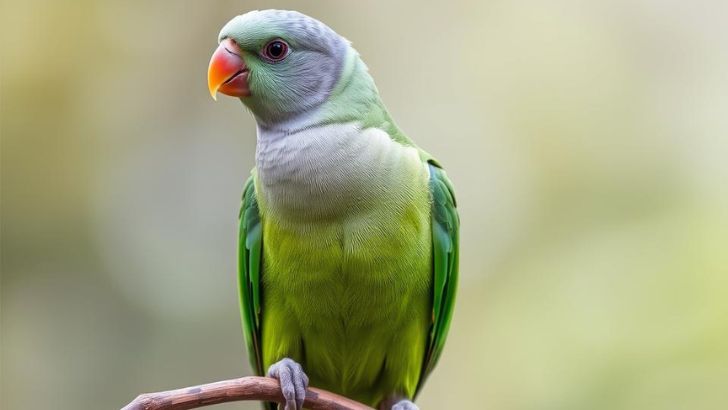
The monk parakeet (Myiopsitta monachus), also known as the Quaker parrot, is a small to medium-sized parrot species native to the temperate and subtropical regions of South America. These birds typically measure 29-31 cm (11-12 inches) in length with a wingspan of 48-53 cm (19-21 inches) and weigh between 90-120 grams (3-4 ounces).
Physically, monk parakeets are distinguished by their bright green plumage on the upperparts, contrasting with a pale gray forehead, cheeks, and throat that resembles a monk´s hood (hence the name). Their flight feathers display a beautiful blue wash, and they possess a stout orange beak. Unlike many parrot species, males and females share identical coloration, making visual sex determination challenging.
These birds are highly intelligent and capable of mimicking human speech, which has contributed to their popularity as pets. However, it´s their remarkable adaptability and social complexity that truly sets them apart in the avian world.
Habitat and Distribution
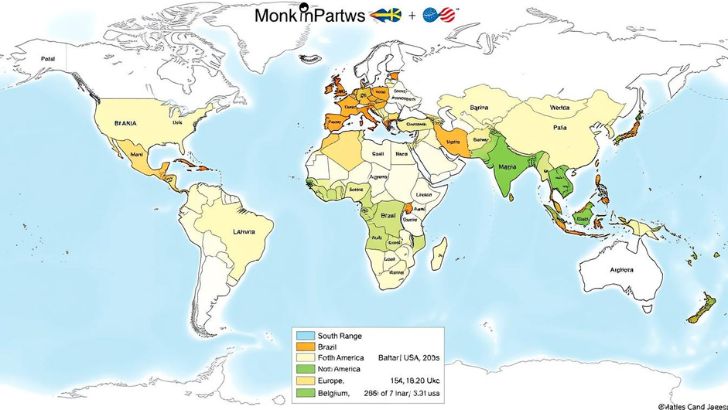
In their native South American range, monk parakeets inhabit open woodlands, savannas, and palm groves in countries including Argentina, Bolivia, Brazil, Paraguay, and Uruguay. They thrive in areas with scattered trees and open ground for foraging, typically at elevations up to 1,000 meters above sea level.
What makes the monk parakeet remarkable is its successful establishment of feral populations far beyond its native range. Due to their popularity in the pet trade during the 1960s and subsequent accidental or intentional releases, these adaptable birds have created thriving colonies in numerous countries across multiple continents.
Introduced Populations
North America
In the United States, significant populations exist in Florida, Texas, Illinois, Connecticut, New York, and several other states. The birds have demonstrated remarkable cold tolerance, surviving even harsh northern winters. In Brooklyn, New York, a well-known colony has made its home at the Gothic Revival archway entrance to Green-Wood Cemetery.
Europe
Established populations can be found in Spain, Belgium, Italy, the United Kingdom, and several other European countries. The Mediterranean climate of southern Europe has proven particularly suitable for these adaptable birds, allowing them to thrive in urban and suburban environments.
Unlike many introduced species that require specific habitat conditions, monk parakeets demonstrate exceptional adaptability to urban and suburban environments. They readily utilize man-made structures for nesting and have adjusted their diets to include locally available food sources, contributing to their successful colonization across diverse geographical regions.
Nesting Patterns and Social Interactions
Monk parakeets exhibit fascinating social behaviors that distinguish them from most other parrot species. They are highly gregarious birds, typically living in noisy, active flocks that may contain dozens of individuals. Their social structure involves complex interactions, with birds engaging in mutual preening, food sharing, and cooperative defense against predators.
Unique Nesting Behavior
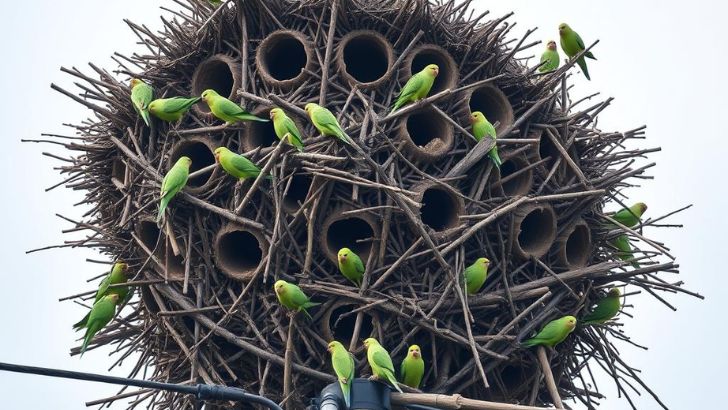
What truly sets monk parakeets apart is their extraordinary nesting behavior. Unlike virtually all other parrot species that nest in tree cavities, monk parakeets are the only parrots that construct elaborate stick nests. Even more remarkably, they build these nests communally, creating massive structures that can house multiple breeding pairs.
Monk parakeet communal nests can weigh up to 200 pounds (90 kg) and house up to 20 breeding pairs. These structures are continuously maintained and expanded year after year, sometimes reaching sizes comparable to a small car!
These impressive architectural achievements are typically built on tall structures such as trees, utility poles, cell towers, and building ledges. Each breeding pair maintains a separate chamber within the larger structure, with individual entrances leading to private nesting areas. The nests are continuously maintained and expanded year-round, serving as both breeding sites and communal roosting quarters.
The thermal properties of these large nests help the birds survive in colder climates far from their native range. The thick walls provide insulation, while the social warmth of multiple birds contributes to temperature regulation within the structure. This adaptation has been crucial to their successful colonization of regions with harsh winters.

Ecological Impact
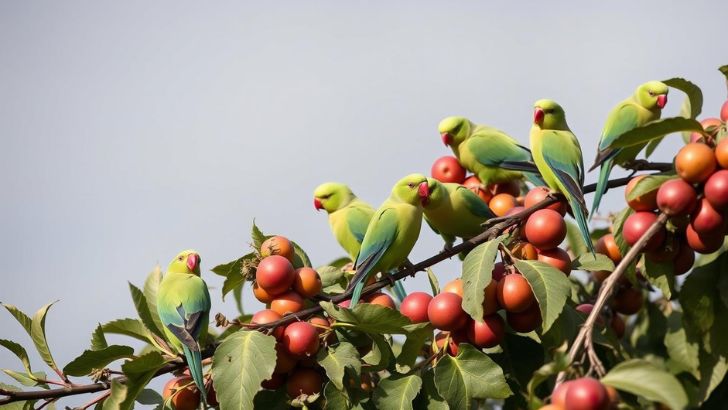
The global spread of monk parakeets has sparked considerable debate about their ecological impact as an introduced species. Their status varies dramatically depending on location and perspective, ranging from beloved urban wildlife to agricultural pest.
See more playful parrot species: rose-ringed parakeet, budgerigar, African grey parrot
Positive Impacts
Positive impacts include increasing urban biodiversity and providing wildlife viewing opportunities, creating habitat for other species that may use abandoned nests, and serving as ambassadors for wildlife conservation and bird appreciation, as well as adapting to urban environments without displacing native cavity-nesting birds.
Concerns
Concerns involve potential crop damage in agricultural areas, nests on utility structures that can cause power outages and fire hazards, possible competition with native species for food resources, and noise pollution in urban areas due to their loud vocalizations.
In their native South American range, monk parakeets are sometimes considered agricultural pests due to their fondness for grain crops. However, comprehensive studies in introduced ranges have often found their agricultural impact to be less severe than initially feared.
In urban environments, their primary conflict with humans stems from their preference for building nests on utility infrastructure, which can cause power outages. Interestingly, research has shown limited evidence of monk parakeets outcompeting native bird species in introduced ranges. Unlike cavity-nesting birds that might compete with native species for limited nesting sites, the monk parakeet´s unique stick-nesting behavior means they utilize different nesting resources than most native birds.
Conservation Efforts

The conservation status of monk parakeets presents an interesting paradox. In their native South American range, they are listed as “Least Concern” by the International Union for Conservation of Nature (IUCN), indicating stable populations. However, they face various challenges in different parts of their range, both native and introduced.
Native Range Protection
In their native South American habitats, monk parakeets face pressures from habitat loss due to agricultural expansion and capture for the pet trade. Several countries have implemented regulations to control the capture and export of wild birds, helping to stabilize native populations.
Argentina, which hosts significant native populations, has implemented monitoring programs to better understand population dynamics and the impact of agricultural practices on these birds. Conservation efforts focus on sustainable agriculture that minimizes conflict between farmers and parakeets.
Managing Populations in Introduced Habitats
In areas where monk parakeets have been introduced, conservation approaches vary widely. Some regions implement control measures to manage populations, particularly where utility infrastructure is affected by their nests. These efforts range from nest removal to population control programs.

More progressive approaches include the installation of alternative nesting platforms near utility poles, providing the birds with suitable nesting sites that don´t interfere with infrastructure. These initiatives represent a balanced approach that acknowledges both human needs and the welfare of the birds.
Conservation organizations in several countries have developed educational programs to increase public awareness about monk parakeets, promoting coexistence rather than conflict. These efforts help transform public perception from seeing the birds as pests to appreciating them as unique urban wildlife.
Cultural Significance

Beyond their ecological significance, monk parakeets have woven themselves into the cultural fabric of many communities where they´ve established populations. Their bright colors, intelligence, and conspicuous presence have made them cultural icons in several urban areas.
Urban Wildlife Icons
In cities like Brooklyn, New York, and Barcelona, Spain, monk parakeets have become beloved local characters. Community groups have formed around the protection and appreciation of these birds, organizing tours to view their colonies and advocating for their conservation. The Green-Wood Cemetery colony in Brooklyn has become a tourist attraction, drawing bird enthusiasts from around the world.
Local festivals and events sometimes celebrate these colorful avian residents. In some Spanish cities, the “Cotorra Festival” honors the monk parakeet´s presence with art, music, and educational activities that highlight urban biodiversity.
Artistic Inspiration
The distinctive appearance and behavior of monk parakeets have inspired various forms of artistic expression. They appear in urban wildlife photography collections, local murals, and community art projects. Their vibrant green plumage and industrious nest-building make them popular subjects for nature documentaries about urban adaptation.

In literature, monk parakeets have appeared in essays and poems about urban nature, symbolizing wildness and adaptation in human-dominated landscapes. Their story of global colonization serves as a metaphor for immigration and finding home in new places, themes explored in both scientific writing and creative literature.
As symbols of successful adaptation, monk parakeets challenge our notions about native and non-native species, prompting deeper conversations about how we define belonging in an increasingly interconnected world.
Frequently Asked Questions
Are monk parakeets endangered?
No, monk parakeets are not endangered. They are listed as “Least Concern” by the International Union for Conservation of Nature (IUCN). Their native populations in South America are stable, and they have established thriving introduced populations in many parts of the world. Their adaptability and reproductive success have contributed to their robust global presence.
Can monk parakeets survive cold winters?
Yes, monk parakeets have demonstrated remarkable cold tolerance. Despite originating from temperate and subtropical regions of South America, they have successfully established populations in areas with harsh winters, including cities like Chicago and New York. Their communal nests provide crucial insulation, and their social roosting behavior helps them conserve body heat during cold periods.
Are monk parakeets legal to keep as pets?
The legality of keeping monk parakeets as pets varies by location. In the United States, several states have banned or restricted ownership, including California, Georgia, Hawaii, Maine, New Hampshire, Pennsylvania, and Wyoming. These restrictions are primarily due to concerns about agricultural impact if the birds escape and establish feral populations. Always check local regulations before considering a monk parakeet as a pet.
How do monk parakeets build their nests?
Monk parakeets build their nests by gathering twigs and branches, which they carefully interweave to create sturdy structures. Unlike other parrot species that nest in cavities, monk parakeets construct elaborate stick nests with multiple chambers. Each breeding pair maintains a separate apartment within the larger communal structure. The birds work cooperatively to build and maintain these nests year-round, continuously adding new materials and repairing damaged sections.
What do monk parakeets eat?
Monk parakeets are primarily herbivorous, feeding on a variety of seeds, fruits, berries, nuts, flowers, and leaf buds. In their native range, they consume the seeds of grasses and other plants, along with fruits and berries. In urban environments, they readily visit bird feeders and may consume a wider range of foods, including bread and other human-provided items. They show particular fondness for sunflower seeds and corn when available.
Join the Monk Parakeet Observation Community

The monk parakeet´s remarkable journey from South American native to global urban dweller represents one of the most fascinating stories of avian adaptation in our modern world. Their intelligence, social complexity, and unique nesting behavior continue to captivate scientists and bird enthusiasts alike.
Whether you view them as welcome splashes of tropical color in urban landscapes or approach them with the caution reserved for introduced species, monk parakeets offer valuable lessons about adaptation, resilience, and the complex relationships between humans and wildlife in our increasingly connected world.