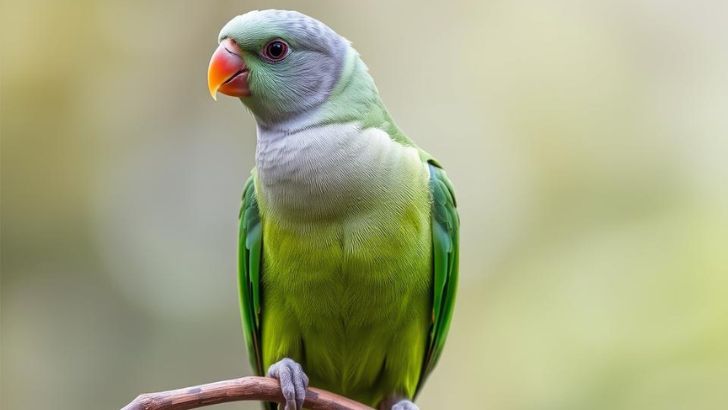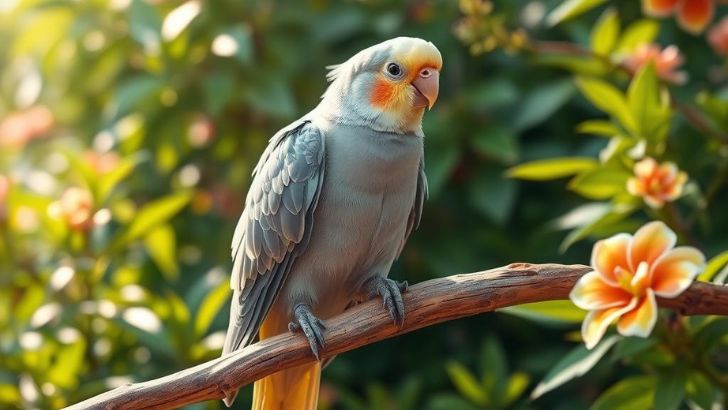

Spotting a flash of color in the trees or hearing an unfamiliar song can spark a moment of wonder. But identifying that mystery bird can feel overwhelming for beginners. Whether you´re watching your backyard feeder or exploring a nature trail, this comprehensive bird identification guide will equip you with the skills to recognize and appreciate the feathered visitors in your world. From physical characteristics to behavioral clues, we´ll walk through everything you need to transform those “what bird is that?” moments into confident identifications.
Identifying Birds by Physical Characteristics
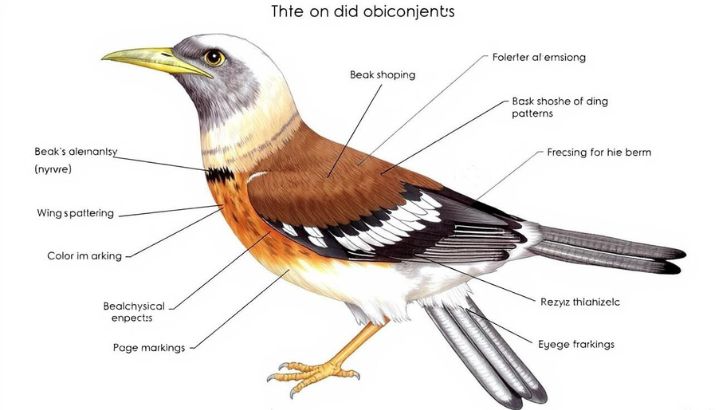
When you spot a bird, the first step in identification is to observe its physical traits. Even a brief glimpse can provide valuable clues if you know what to look for.
Size and Shape
Size provides an immediate clue to a bird´s identity. Compare the mystery bird to familiar species like robins or sparrows. Is it smaller than a sparrow? Larger than a crow? Bird shapes also fall into recognizable groups – is it round and plump like a dove, or sleek and streamlined like a falcon?
Color Patterns and Field Marks
While colors can be eye-catching, look for specific patterns and markings that remain consistent regardless of lighting conditions:
- Eye rings, lines, or “spectacles”
- Wing bars or patches
- Breast spots or streaking
- Distinctive cap or crown coloration
- Tail patterns (bands, spots, or colored edges)
Bill Shape and Structure
A bird´s bill is specialized for its diet and provides excellent identification clues:
- Short, thick bills (seed eaters like finches)
- Long, slender bills (insect eaters like warblers)
- Hooked bills (predators like hawks)
- Flat, wide bills (ducks and water birds)
- Curved bills (nectar feeders like hummingbirds)
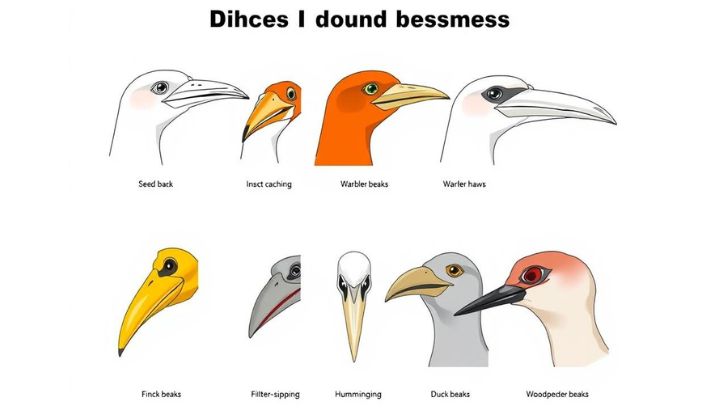
Chisel-like bills (woodpeckers)
Identifying Birds by Behavioral Traits
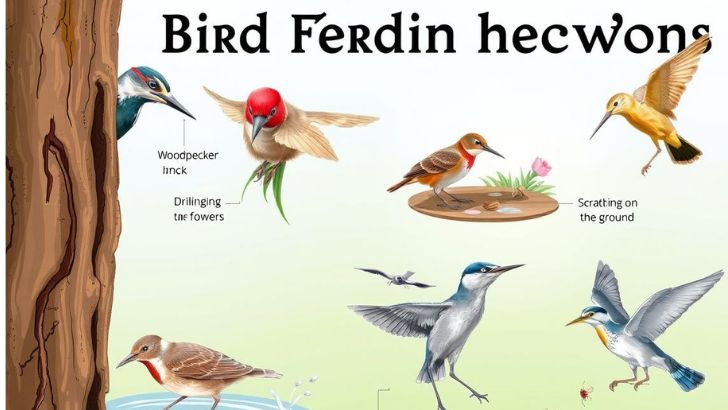
Physical characteristics tell only part of the story. How a bird moves, feeds, and interacts with its environment provides crucial identification clues that field guides often can´t fully capture.

Flight Patterns
Different bird groups have distinctive flying styles that can be spotted even at a distance:
- Woodpeckers: Undulating, roller-coaster flight
- Hawks and eagles: Soaring with wings held flat
- Finches: Bouncy, wave-like flight
- Hummingbirds: Hovering and darting movements
- Swallows and swifts: Fast, acrobatic flying with quick turns
Feeding Habits
Observing how birds feed can provide immediate clues to their identity:
- Ground scratching (sparrows and towhees)
- Hovering before flowers (hummingbirds)
- Drilling into tree bark (woodpeckers)
- Wading in shallow water (herons and egrets)
- Diving completely underwater (loons and grebes)
- Hawking insects from perches (flycatchers)
Social Behavior
Pay attention to whether birds are solitary or in groups. Some species, like cedar waxwings, almost always travel in flocks, while others, like many woodpeckers, are typically seen alone or in pairs. These social patterns can help narrow down identification possibilities.
Habitat-Based Bird Identification
Where you find a bird can be as important as what it looks like. Different species have evolved to thrive in specific environments, making habitat a powerful identification clue.

Forest and Woodland Birds
Forests host a diverse range of species that have adapted to different vertical layers:
- Canopy: Warblers, tanagers, and vireos
- Mid-story: Woodpeckers, nuthatches, and chickadees
- Understory: Thrushes, towhees, and wood-warblers
- Forest floor: Grouse, wild turkeys, and ovenbirds
Wetland and Aquatic Birds
Water environments support specialized birds with adaptations for swimming, wading, or diving:
- Marshes: Herons, egrets, rails, and red-winged blackbirds
- Lakes and ponds: Ducks, geese, swans, and grebes
- Shorelines: Sandpipers, plovers, and killdeer
- Rivers and streams: Kingfishers, dippers, and some duck species
Open Country and Grassland Birds
Open habitats host birds adapted to life with fewer trees and more exposure:
- Grasslands: Meadowlarks, bobolinks, and many sparrow species
- Agricultural areas: Killdeer, horned larks, and vesper sparrows
- Scrubland: Towhees, thrashers, and quail
Pro Tip: Habitat Narrows the Field
When using a field guide or bird identification app, knowing the habitat can dramatically reduce the number of possible species to consider. For example, if you´re in a salt marsh, you can immediately rule out forest-dwelling species.
Identifying Birds by Songs and Calls
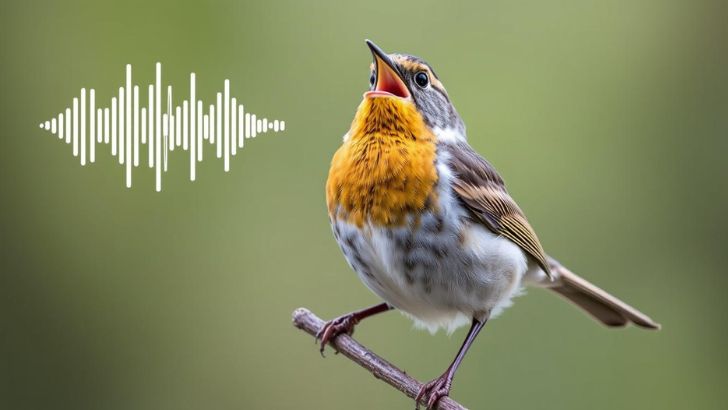
Bird vocalizations are often the first (and sometimes only) indication of a bird´s presence. Learning to identify birds by sound can double or triple the number of species you can identify.
Common Bird Songs and Calls
Here are some distinctive bird vocalizations that are relatively easy to learn:
| Bird | Song/Call Description | Mnemonic |
| American Robin | Cheerful, caroling phrases | “Cheerily, cheer-up, cheerio” |
| Black-capped Chickadee | Clear whistled two-note song | “Fee-bee” |
| Northern Cardinal | Clear, whistled phrases | “Cheer up! Cheer up! Cheer up!” |
| Eastern Towhee | Unique up-and-down tonal pattern | “Drink your teeeea” |
| Barred Owl | Rhythmic hooting | “Who’s making your meals, who’s cooking for everyone” |
| White-throated Sparrow | Clear, whistled notes | “Beloved Canada, Canada, Canada” |
Tips for Learning Bird Songs
- Focus on learning the songs of common birds in your area first
- Listen for patterns: number of notes, rhythm, pitch changes
- Create your own mnemonics that make sense to you
- Practice regularly with recordings before heading into the field
- Focus on one or two new songs at a time rather than trying to learn many at once
Regional Species Spotlight
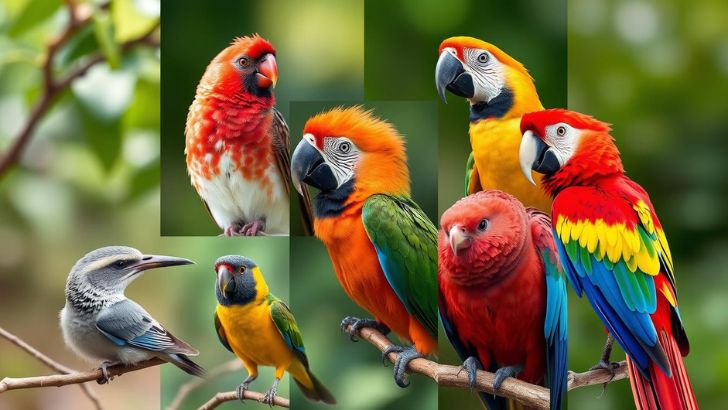
While there are thousands of bird species worldwide, focusing on common birds in your region makes identification more manageable. Here´s a spotlight on distinctive birds from different continents that showcase the diversity of avian life.
Northern Cardinal (North America)

This brilliant red bird with a distinctive crest and black face mask is unmistakable. Found throughout eastern and central North America, cardinals are year-round residents that frequent backyard feeders.
European Robin (Europe)

Not to be confused with the American Robin, this small bird has a distinctive orange-red breast and face. A familiar garden bird throughout Europe, it´s known for its bold, inquisitive nature.
Laughing Kookaburra (Australia)
Famous for its laughing call, this large kingfisher has a distinctive brown and white plumage pattern. Native to eastern Australia, it´s known for its habit of hunting snakes and small reptiles.

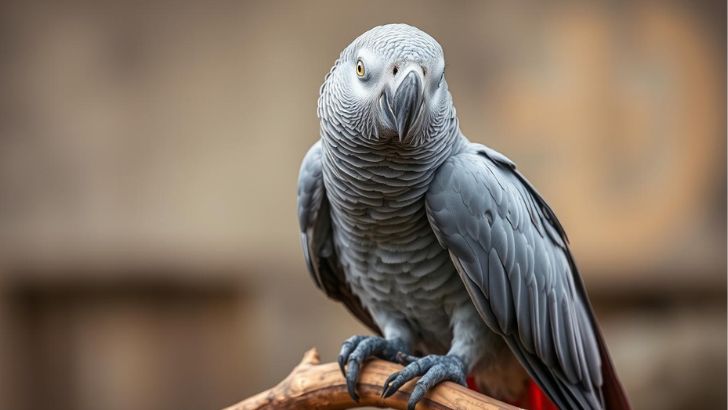
African Grey Parrot (Africa)
Known for its remarkable intelligence and vocal abilities, this medium-sized parrot has distinctive grey plumage with a bright red tail. Native to the rainforests of central Africa.
Scarlet Macaw (South America)
This large, colorful parrot has vibrant red, yellow, and blue plumage. Native to humid evergreen forests in tropical South America, it´s unfortunately threatened by habitat loss and the pet trade.

Tui (New Zealand)
This medium-sized bird has distinctive glossy blue-green plumage and a unique white throat tuft. Endemic to New Zealand, it´s known for its complex and melodious song that includes bell-like notes and clicks.

Essential Tools for Bird Identification
The right tools can dramatically improve your bird identification success. Here are the essential resources that every birder should consider:
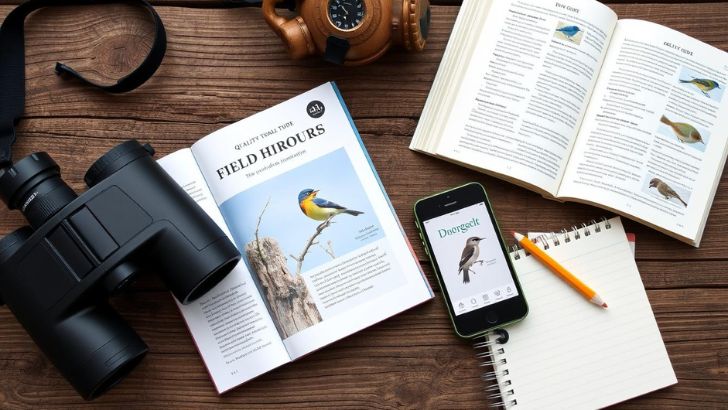
See more resources for bird lovers: small pet birds, African grey parrot, cockatiel
Field Guides
A good field guide is fundamental to bird identification. Modern guides offer detailed illustrations or photographs, range maps, and descriptions of behavior and habitat.
Recommended Field Guides:
- Sibley Guide to Birds (comprehensive, excellent illustrations)
- Peterson Field Guide (classic with helpful arrows pointing to key features)
- National Geographic Field Guide (detailed with excellent range maps)
- Kaufman Field Guide (beginner-friendly with digital photographs)
What to Look for in a Field Guide:
- Clear illustrations or photographs
- Range maps showing seasonal distribution
- Information on behavior and habitat
- Portable size for field use
- Durable construction
Binoculars
Quality binoculars bring distant birds into clear view, revealing the details needed for accurate identification.
Binocular Basics
Binoculars are described by two numbers (e.g., 8×42). The first number indicates magnification power, while the second represents the diameter of the objective lens in millimeters. For beginners, 8×42 offers an ideal balance of magnification, field of view, and light-gathering ability.
Bird Identification Apps
Modern smartphone apps have revolutionized bird identification, offering interactive guides, sound libraries, and even AI-powered identification tools.
| App | Key Features | Best For |
| Merlin Bird ID | Photo ID, Sound ID, step-by-step ID, offline capability | New and intermediate-level birdwatchers |
| Audubon Bird Guide | Comprehensive database, migration maps, sighting records | Intermediate birders |
| eBird | Checklist creation, hotspot finder, global database | Tracking observations and finding birds |
| BirdNET | Sound recognition algorithm, recording capability | Identifying birds by sound |
Pro Tips for Beginning Bird Watchers
Even experienced birders were beginners once. These practical tips will help you develop your identification skills more quickly and avoid common frustrations.

Getting Started
- Start with common local birds before tackling rarities
- Learn to identify birds by family or group first, then by species
- Visit different habitats to expand your knowledge
- Join local birding groups or guided walks to learn from experienced birders
- Keep a life list to track your progress and stay motivated
Field Techniques
- Keep the sun at your back when observing birds
- Move slowly and quietly to avoid startling birds
- Listen first, then look – sounds often alert you to a bird´s presence
- Use the “clock face” method to direct others to a bird´s location
- Take field notes or sketches to improve your observation skills
Remember:
Bird identification is a skill that develops with practice. Even experienced birders occasionally encounter birds they can´t identify with certainty. The journey of learning is part of what makes birding such a rewarding hobby!
Start Your Bird Identification Journey Today
Bird identification opens a window into the fascinating world of avian life all around us. With the tips, tools, and techniques in this guide, you´re well-equipped to begin recognizing the birds in your neighborhood and beyond. Remember that becoming proficient at bird identification takes time and practice, but each correct identification brings its own reward.
The more you learn about birds, the more you´ll appreciate their remarkable adaptations, behaviors, and ecological roles. And as your identification skills grow, consider contributing your observations to citizen science projects like eBird or Project FeederWatch, where your data can help scientists track bird populations and migration patterns.