Everyone hopes their dogs stay healthy and happy. But some foods we eat can harm them. These foods can create severe health problems.
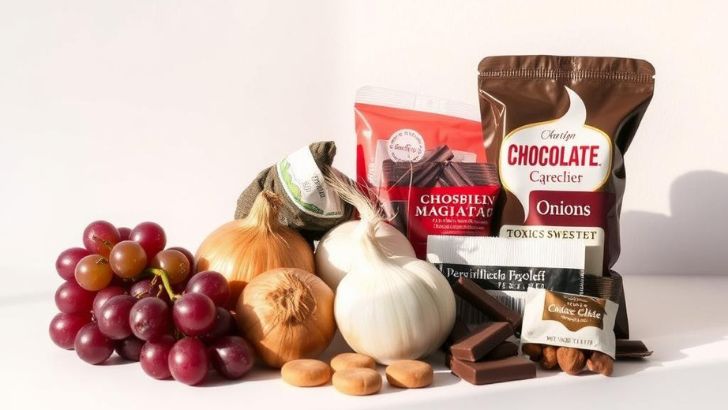
In this guide, we´ll look at common toxic substances that can hurt dogs. We´ll discuss why they’re risky, and how to protect your dog. We will cover foods such as chocolate, grapes, onions, and Xylitol.
Understanding the Dangers of Toxic Foods for Dogs
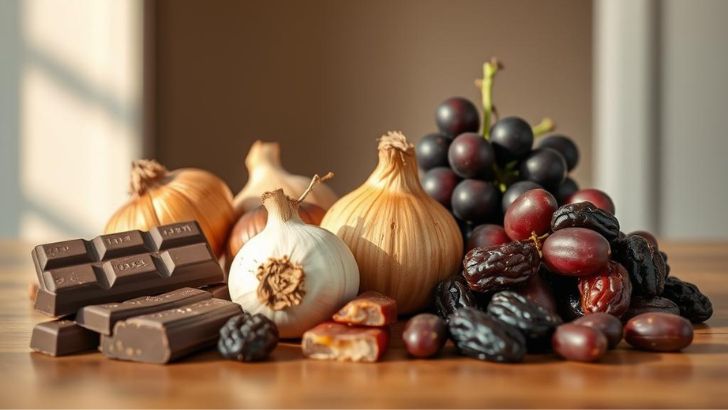
Knowing which foods are toxic to dogs is essential for pet owners. We want to provide our pets with the best care, which includes monitoring what they eat..
Many foods safe for humans can harm or kill dogs. To protect our dogs, we need to understand why some foods are bad and dispel myths about dog food.
Why Certain Foods Are Harmful
Some foods have compounds dogs can’t break down, leading to poisoning. Certain plants and foods can cause mild to severe health issues in dogs.
We must know which foods are toxic and keep them away from our pets. Dogs metabolize food differently than humans, making them more sensitive to certain compounds.
| Food | Toxic Compound | Symptoms |
|---|---|---|
| Chocolate | Theobromine | Nausea, loose stools, and a rapid heartbeat |
| Grapes/Raisins | Unknown | Kidney malfunction, throwing up, and extreme tiredness |
| Onions/Garlic | N-propyl disulfide | Anemia, Vomiting, Weakness |
Common Myths About Dog Nutrition
There is a lot of misinformation about dog food. Some think dogs can eat anything, while others are overly cautious without knowing the risks.
“Many people assume that because dogs are omnivores, they can eat a wide variety of foods, including those that are toxic to them. But this is not true.”
We must separate fact from fiction and rely on science for our dogs’ diets. This way, we can give them the safest and healthiest food options.
By understanding the risks of certain foods and debunking myths about dog nutrition, we can protect our dogs. This helps them live healthy lives.
Chocolate: A Sweet Treat That´s Dangerous

Chocolate is a popular treat for humans, but can be dangerous for dogs. The darker the chocolate, the more dangerous it is. This is because darker chocolate has more Theobromine.
Theobromine: The Culprit in Chocolate
Theobromine is a stimulant in chocolate that affects pets differently than people. It can cause mild to severe symptoms. It´s important for pet owners to know how dangerous it is.
Symptoms of Chocolate Toxicity
If your dog eats chocolate, watch for these signs:
- Vomiting
- Diarrhea
- Increased heart rate
- Restlessness
- In extreme situations, it may lead to seizures or even coma.
The severity of these symptoms depends on the type and amount of chocolate eaten. Dark and baking chocolate are more toxic than milk chocolate because they have more Theobromine.
What to Do if Your Dog Eats Chocolate
If you think your dog has eaten chocolate, act fast:
- Call your vet or a pet poison hotline right away.
- Tell them about the type and amount of chocolate your dog ate.
- Follow your vet´s advice, which may include making your dog vomit or administering activated charcoal.
Quick action can really help your dog. Store chocolate away from your dog and teach everyone in your home about its dangers. This helps prevent accidents.
Grapes and Raisins: Hidden Dangers for Dogs
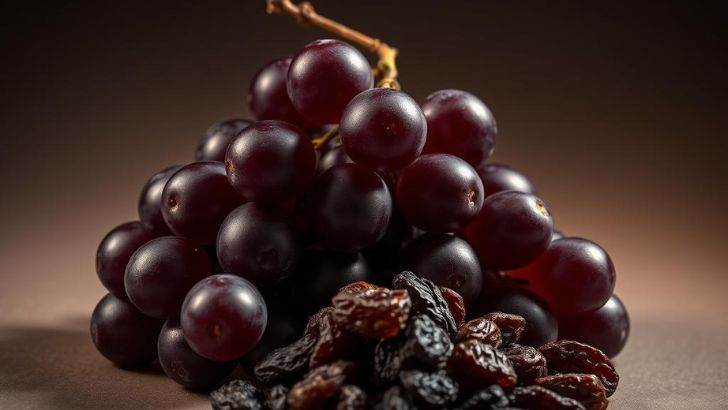
Grapes and raisins are common in many homes, yet are dangerous for dogs. They are safe for humans but can harm dogs, even causing kidney failure.
How Grapes Affect Dogs’ Health
The exact reason grapes and raisins are toxic to dogs is still a mystery. Even a small amount can be harmful. They may cause kidney damage, leading to kidney failure.
Key factors to consider:
- The amount consumed: Even a small amount can be toxic.
- The form: Both grapes and raisins are harmful.
- Individual sensitivity: Dogs react differently to grape ingestion.
Symptoms of Grape Poisoning
It´s important to know the signs of grape poisoning. Watch for:
- Lethargy
- Lack of appetite
- Vomiting
- Diarrhea
- Abdominal pain
If your dog shows these signs after eating grapes or raisins, get vet help immediately.
Treatment Options After Ingestion
If your dog eats grapes or raisins, act fast. Treatment may include:
- Inducing vomiting to prevent further absorption
- Administering activated charcoal to help absorb the toxin
- Providing supportive care, such as intravenous fluids, to manage symptoms and prevent kidney damage
Prevention is key. Keep grapes and raisins away from your dog to avoid toxicity.
Onions and Garlic: Everyday Foods to Avoid
The Allium family, which includes onions and garlic, contains compounds toxic to dogs. These ingredients are commonly used in recipes. They can be a threat if not handled carefully.
See more guides on keeping dogs safe: what can dogs eat, toxic food for birds, dog diarrhea causes
Why Onions Are Harmful for Dogs
Onions contain a compound that can damage a dog´s red blood cells, leading to anemia. This condition can happen with a small amount over time or a large amount at once. The toxicity isn´t limited to raw onions; cooked and powdered onions can also be harmful.
“Onions, whether raw, cooked, or powdered, are part of a group of foods that can lead to hemolytic anemia in dogs,” as noted by veterinary experts. This condition shows why we must keep onion-containing foods away from our pets.
Signs of Onion or Garlic Toxicity
Symptoms of onion or garlic toxicity in dogs include vomiting, diarrhea, lethargy, and a lack of appetite. In severe cases, it can lead to more serious health issues, such as anemia. If you think your dog has ingested onions or garlic, watch their behaviour closely. Seek veterinary advice if any symptoms arise.
Safe Alternatives for Flavoring
To add flavor to your dog´s meals without risking their health, use dog-safe ingredients like parsley, basil, or ginger. These herbs enhance food without the risks of onions and garlic. Always check with your veterinarian before adding new foods or ingredients to your dog´s diet to make sure they are safe and suitable.
By being mindful of the ingredients we use in our cooking and keeping harmful foods away from our dogs, we can prevent unnecessary suffering. This helps our pets.
Xylitol: A Sugar Substitute That Can Be Fatal
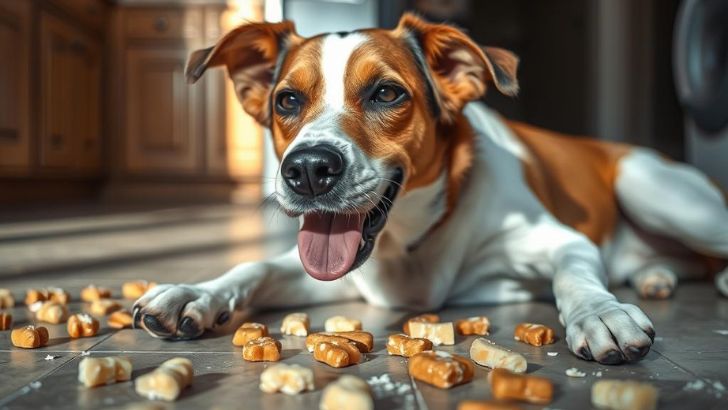
Xylitol is hidden in various household items, posing a big risk to dogs. It´s in sugar-free products, making it dangerous for dogs who might eat these items.
How Xylitol Impacts Dogs
Dogs that eat xylitol can have a quick drop in blood sugar, called hypoglycemia. The reaction might begin as quickly as 15 to 30 minutes. Symptoms are tiredness, stumbling, and seizures. In bad cases, it can cause liver failure.
Common Products Containing Xylitol
Xylitol is in many things, like sugar-free gum, candy, and baked goods. It´s in some peanut butters and oral care items. Always check the ingredients to ensure they are safe for your dog.
- Sugar-free gum and candy
- Baked goods labelled as sugar-free
- Some peanut butter brands
- Toothpaste and mouthwash
Emergency Steps if Your Dog Ingests Xylitol
If you believe your dog has ingested xylitol, respond quickly. Call your vet or a pet poison hotline immediately. They´ll tell you what to do, like making your dog vomit or administering activated charcoal. In serious cases, your dog might need to stay in the hospital.
Immediate action is crucial when dealing with xylitol ingestion. The faster you act, the less harm it may do to your dog.
Avocado: Is It Really That Bad?

Avocados are good for people but not for dogs. They have a toxic compound called Persin. This can harm dogs, depending on the part eaten and how much.
Components of Avocado That Can Be Toxic
Persin is the main toxin in avocados. It exists in the leaves, peel, and pit. The flesh has less, but it’s still a worry. The pit, skin, and leaves are the most dangerous because they have more Persin.
Symptoms of Avocado Poisoning
If your dog eats avocado, look for signs of poisoning. These are vomiting, diarrhea, and heart problems in bad cases. How severe depends on how much and which part of the avocado the dog ate.
Safe Serving Sizes and Preparations
If you want to give your dog avocado, do it safely. Take out the pit and skin, and only provide a little bit of the flesh. But, always talk to your vet before changing your dog´s diet.
| Avocado Part | Toxicity Level | Precautions |
|---|---|---|
| Flesh | Low | Remove pit and skin, serve in small amounts |
| Pit | High | Avoid ingestion |
| Skin | High | Avoid ingestion |
| Leaves | High | Avoid ingestion |
Alcohol: Risks Beyond the Human Palate

When we enjoy drinks, it’s important to remember they are harmful to dogs. Alcohol is toxic, affecting their nervous system. This can lead to serious health problems or even death.
How Alcohol Affects a Dog´s Body
When dogs drink alcohol, it enters their blood quickly. This affects their nervous system, liver, and other organs. Even a little can cause big problems because dogs are smaller and metabolize differently than humans.
Key effects of alcohol on dogs include:
- Depression of the central nervous system
- Hypoglycemia (low blood sugar)
- Hypothermia (low body temperature)
- Vomiting and diarrhea
- In severe cases, coma or death
Signs of Alcohol Poisoning
It’s important to know the signs of alcohol poisoning in dogs. Symptoms can depend on how much they drank and their size.
| Symptoms | Description |
|---|---|
| Vomiting | One of the first signs, indicating the body’s attempt to expel the toxin |
| Lack of Coordination | Dogs may stumble or have difficulty walking |
| Seizures | In severe cases, alcohol can cause seizures |
| Coma | In extreme cases, dogs may fall into a coma |
Emergency Care for Alcohol Ingestion
If you think your dog has drunk alcohol, act immediately. Call your vet or an animal hospital emergency room. They might induce vomiting, give activated charcoal, and use IV fluids to help your dog.
Prevention is key: Keep alcohol away from your dog. Knowing the dangers and taking steps to prevent it can keep your dog safe.
Protecting Your Pup: A List of Other Toxic Foods

Many foods in our homes can harm our dogs. It´s important for dog owners to know these dangers.
Other Common Foods to Avoid
Some foods in our kitchens can be bad for dogs. Here are a few examples:
- Caffeine: Like chocolate, caffeine has theobromine, which is toxic to dogs.
- Raw or Undercooked Meat, Eggs, and Bones: These can have Salmonella and E. coli, which are harmful.
- Bones: Cooked bones can splinter and cause harm. Raw bones can have bacteria.
- Macadamia Nuts: These can make dogs weak, depressed, and cause other health issues.
- Fatty Foods: High-fat foods can lead to pancreatitis, a painful condition.
Household Plants That Are Toxic to Dogs
Many plants in our homes can be toxic to dogs. Here are some of the most dangerous:
- Lily: All parts of lilies are toxic, potentially causing kidney failure.
- Sago Palm: The seeds of the sago palm are toxic, causing liver failure.
- Tulip: The bulbs of tulips can cause vomiting, diarrhea, and respiratory issues.
- Azalea: Ingestion can lead to vomiting, diarrhea, and in severe cases, coma or death.
Understanding the Importance of Labels
Reading labels is a simple way to protect our dogs. Many products, like sugar-free gum, contain xylitol, which is dangerous. Checking ingredients keeps our pets safe.
Knowing which foods are dangerous and being careful with products keeps your home safe for your pets. Always ask a vet if you´re unsure about what to avoid.
Encouraging Safe Snacking for Your Dog
Some foods are bad for dogs, so it´s key to provide safe snacks. Being careful about what we share with our pets keeps them safe and healthy.
Nutritious Snack Options
Carrots, green beans, and sweet potatoes are great for dogs. They´re safe and full of nutrients. You can also give them apples and blueberries, but remove the seeds and pits.
Introducing New Foods Safely
Start new foods slowly to avoid stomach problems. Give a small amount first and observe their reaction. If they don´t do well, speak to your vet.
Seeking Professional Dietary Advice
Talking to your vet is important for your dog´s diet. They can suggest the best food based on your dog´s age, breed, and health. This helps avoid harmful foods.
Being careful and informed helps keep your dog safe from harmful foods. Always think about what´s best and ask for recommendations when needed.
FAQ
What are the most toxic foods for dogs?
Foods like chocolate, grapes, raisins, onions, garlic, and Xylitol products are toxic. They can cause health issues, from mild to severe.
Why is chocolate toxic to dogs?
Chocolate has Theobromine, which dogs can´t break down. Darker chocolate is more dangerous. Symptoms can include vomiting, diarrhea, and a fast heart rate.
What should I do if my dog eats grapes or raisins?
If your dog eats grapes or raisins, watch for signs like tiredness and loss of appetite. Get vet help right away. They may induce vomiting or administer activated charcoal.
Can dogs eat onions or garlic?
No, onions and garlic are bad for dogs. They can cause anemia. Look for safe flavorings for their food instead.
What is Xylitol, and why is it toxic to dogs?
Xylitol is a sugar substitute in sugar-free products. It causes low blood sugar and liver failure in dogs. If your dog eats it, get vet help fast.
Are avocados safe for dogs to eat?
Avocado flesh is okay in small amounts, but the pit and skin are toxic. Watch for signs of poisoning and talk to your vet.
How does alcohol affect dogs?
Alcohol is harmful to dogs, affecting the nervous system. It can lead to coma or death. Keep alcohol away from your dog and seek help if they drink it.
What are some healthy alternatives to toxic foods for my dog?
Safe snacks include carrots, green beans, and sweet potatoes. Always introduce new foods slowly and ask your vet for advice.
How can I ensure my home is safe for my dog?
Know which foods and plants are toxic. Read labels for Xylitol. Being aware helps keep your home safe for your dog.
Why is it crucial to consult with my veterinarian about my dog´s diet?
Talking to your vet ensures your dog gets the right food. They can advise on safe foods and healthy