
The world of felines extends beyond the familiar domestic cats most of us know. Exotic cat breeds capture our attention with their striking appearances, unusual origins, and distinct personalities. These rare felines often exhibit wild-looking coats, unusual body structures, or temperaments that differentiate them from typical domestic cats. If you are fascinated by the extraordinary and are considering adding a unique companion to your home, these lesser-known exotic cat breeds could capture your heart.
What Makes a Cat Breed “Exotic”?
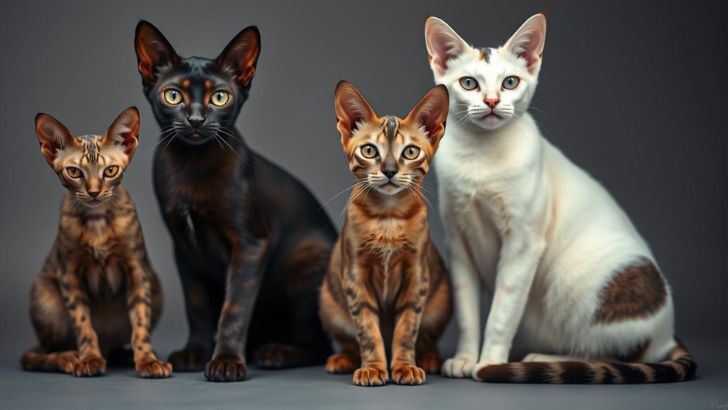
Exotic cat breeds often display distinctive physical traits that make them stand out. The term “exotic” in the cat world usually refers to breeds with one or more distinctive characteristics that set them apart from common domestic cats. These unique qualities can include rare geographical origins or limited breeding populations, unusual physical features like distinctive coat patterns, eye colors, or body structures, wild ancestry or appearance that mimics wild cats, special behavioral traits or temperaments, and recent development as a breed within the last few decades.
While some exotic breeds result from natural evolution, others are the result of carefully planned selective breeding programs aimed at creating specific traits. They all share a certain “wow factor” that makes cat enthusiasts take a second look when they see these remarkable felines for the first time.
1. Sokoke

The Forest Cat of Kenya
The Forest Cat of Kenya. The Sokoke is one of the world´s rarest naturally occurring cat breeds, originating from the Arabuko-Sokoke Forest in Kenya. Initially discovered in the 1970s, this breed was once thought to be a hybrid between wild cats and domestic cats but is now recognized as a distinct natural breed.
Distinctive Features
Sokokes are medium-sized cats with a slender, athletic build. Their most striking feature is their coat – a modified tabby pattern called “African tabby” or “marble tabby” that creates an eye-catching wood-grain appearance. Their short, coarse coat typically displays brown, amber, and black patterns that provide excellent camouflage in their native forest environment. With large, alert ears and almond-shaped amber to light green eyes, Sokokes have a wild, attentive appearance.
Personality
These cats are highly intelligent, active, and vocal. Sokokes form strong bonds with their human families while maintaining an independent spirit. They´re excellent climbers who enjoy perching in high places to survey their domain. Despite their wild appearance, they´re quite affectionate and will often follow their favorite people around the house.
Special Care Requirements
Sokokes need plenty of mental and physical stimulation. Interactive toys, climbing structures, and puzzle feeders are essential for keeping these active cats engaged. Their short coat requires minimal grooming, but they do appreciate regular play sessions that mimic hunting activities.
2. Peterbald
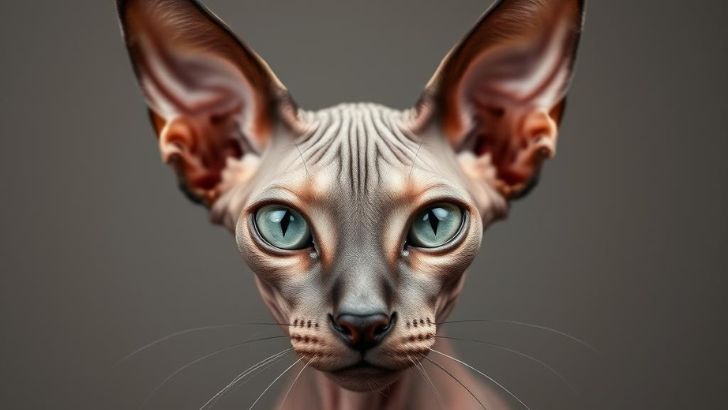
Russia´s Elegant Hairless Wonder
The Peterbald is a relatively new breed that originated in St. Petersburg, Russia, in 1994. Created by crossing an Oriental Shorthair with a Donskoy, the Peterbald combines elegance with a unique coat variation system.
Distinctive Features
Unlike other hairless breeds, Peterbalds can display five different coat types ranging from completely bald to a short, velvet-like coat called “brush.” Their skin can feel sticky to the touch due to natural oils. With a long, slender body, wedge-shaped head, and oversized ears, Peterbalds have an unmistakably elegant appearance. Their almond-shaped eyes can be any color, though green and blue are particularly striking against their hairless skin.
Personality
Peterbalds are known for their dog-like loyalty and affectionate nature. They´re highly social cats who form strong bonds with their families and often greet visitors with enthusiasm. Intelligent and curious, these cats enjoy interactive play and can even learn tricks. They´re also notably vocal, using a range of sounds to communicate with their humans.
Special Care Requirements
Without the protection of a full coat, Peterbalds need special care. Regular bathing (every 1-2 weeks) helps manage skin oils, and sunscreen is necessary if they spend time in direct sunlight. They also need protection from cold temperatures and should wear sweaters in chilly conditions. Their large ears require regular cleaning to prevent wax buildup.
3. Kurilian Bobtail

Discover other unique cat breeds: long haired cat breeds, short haired cat breeds, rare dog breeds
The Pom – Pom Tailed Hunter from Russia
The Kurilian Bobtail naturally developed on Russia´s Kuril Islands, located between Japan and the Kamchatka Peninsula. These cats have existed in their native region for hundreds of years but only gained international recognition in recent decades.
Distinctive Features
The most distinctive feature of the Kurilian Bobtail is its “pom-pom” tail – a naturally occurring bobbed tail consisting of 2-10 vertebrae that can form various shapes including spiral, snag, or whisk. These medium to large cats have a muscular, compact body with a broad chest and strong legs. Their coat can be short or semi-long and comes in various colors and patterns, with tabby being particularly common. With round eyes that can be any color, Kurilians have a wild, alert expression.
Personality
Kurilian Bobtails are known for their exceptional hunting abilities and love of water – traits that served them well in their island homeland. Despite their wild appearance, they´re gentle, highly social cats who form strong bonds with their families. They´re intelligent problem-solvers who enjoy interactive play and can even learn to walk on a leash.
Special Care Requirements
These robust cats are generally healthy and low-maintenance. Semi-longhaired varieties benefit from weekly brushing to prevent matting. Their love of water and fishing may lead them to play in water bowls, so secure water sources are recommended. Providing climbing opportunities and interactive toys helps satisfy their active nature.
Exotic Cat Breed Comparison
| Breed | Size | Coat Type | Lifespan | Activity Level | Rarity Level |
| Sokoke | Medium (6-10 lbs) | Short, tabby pattern | 12-15 years | Very High | Extremely Rare |
| Peterbald | Medium (7-14 lbs) | Hairless to brush | 12-15 years | High | Very Rare |
| Kurilian Bobtail | Medium-Large (8-15 lbs) | Short or Semi-long | 15-20 years | High | Rare |
| Ukrainian Levkoy | Medium (7-12 lbs) | Hairless | 9-13 years | Moderate | Extremely Rare |
| Chausie | Large (15-25 lbs) | Short, ticked tabby | 12-14 years | Very High | Rare |
| Dragon Li | Medium (9-14 lbs) | Short, mackerel tabby | 15-20 years | High | Very Rare |
| Ojos Azules | Small-Medium (7-11 lbs) | Short, various colors | 10-15 years | Moderate | Extremely Rare |
| Arabian Mau | Medium (8-16 lbs) | Short, various patterns | 12-14 years | High | Rare |
| Serengeti | Medium-Large (8-15 lbs) | Short, spotted | 10-15 years | Very High | Rare |
| LaPerm | Small-Medium (5-10 lbs) | Curly, various lengths | 10-15 years | Moderate | Uncommon |
4. Ukrainian Levkoy

The Bat-Eared Beauty from Ukraine
The Ukrainian Levkoy is one of the newest exotic cat breeds, developed in Ukraine in the early 2000s. This distinctive breed was created by crossing Scottish Fold cats with the Donskoy, resulting in a unique combination of folded ears and hairlessness.
Distinctive Features
The Ukrainian Levkoy´s most striking features are its folded ears and lack of fur. The combination gives these cats an unusual, almost bat-like appearance. They have a medium-sized, muscular body with angular features, including a flat head, straight profile, and prominent cheekbones. Their skin can range from completely hairless to having a light downy covering, and comes in all colors and patterns.
Personality
Despite their somewhat alien appearance, Ukrainian Levkoys are known for their friendly, sociable nature. They form strong bonds with their human families and get along well with other pets. These intelligent cats are playful and curious, enjoying interactive toys and games. They´re also notably vocal, using a variety of sounds to communicate.
Special Care Requirements
Like other hairless breeds, Ukrainian Levkoys need protection from extreme temperatures and direct sunlight. Regular bathing (every 1-2 weeks) helps manage skin oils, and their large ears require careful cleaning. Due to the genetic mutations that create their distinctive features, it´s important to work with reputable breeders who prioritize health testing.
5. Chausie

The Jungle Cat Descendant
The Chausie is a captivating exotic cat breed created by hybridizing domestic cats with the jungle cat (Felis chaus), a wild species found in some regions of Asia. While breeding efforts began in the 1960s, the Chausie only received official recognition as a domestic breed in the 1990s.
Distinctive Features
Chausies are large, athletic cats with long bodies, substantial bones, and powerful muscles. They typically weigh between 15-25 pounds, with males being larger than females. Their most distinctive features include their tall, upright ears, long legs, and high cheekbones that give them a wild appearance. Chausies come in three colors: solid black, brown ticked tabby, and grizzled tabby.
Personality
Despite their wild ancestry, modern Chausies (F4 generation and beyond) are fully domestic in temperament. They´re highly intelligent, energetic cats who form strong bonds with their families. Chausies retain a playful, kitten-like demeanor well into adulthood and are known for their impressive jumping ability – they can easily leap over 6 feet high! These social cats typically get along well with other pets and children.
Special Care Requirements
Chausies need plenty of space and stimulation to thrive. Tall cat trees, interactive toys, and daily play sessions are essential for these active felines. Their short coat requires minimal grooming, but they do need a high-quality, protein-rich diet to support their muscular build. Due to their size and energy level, Chausies are best suited to homes with ample space for them to run and play.
6. Dragon Li (Chinese Li Hua)
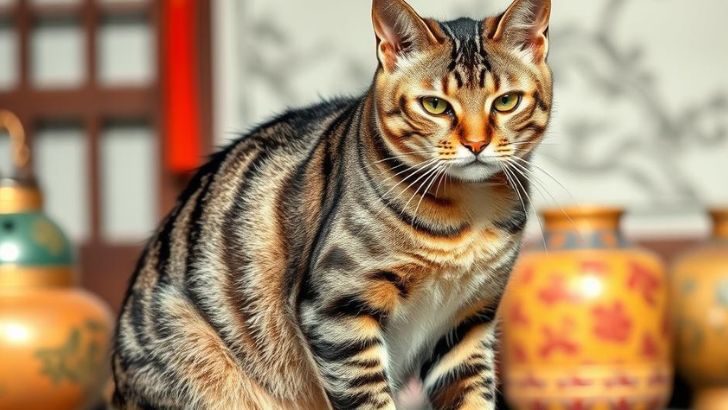
China´s Natural Treasure
The Dragon Li, also known as the Chinese Li Hua, is one of the oldest natural cat breeds in the world. Native to China, these cats have been depicted in ancient Chinese art and literature for centuries, though they weren´t recognized as a distinct breed internationally until recently.
Distinctive Features
Dragon Li cats have a distinctive brown mackerel tabby coat with black markings that create a “broken” pattern resembling Chinese calligraphy. Their medium to large muscular bodies are topped with a broad head featuring a distinctive “smile” – a slight upturn at the corners of the mouth. With bright, almond-shaped yellow or green eyes and medium-sized ears, Dragon Lis have an alert, intelligent expression.
Personality
These cats are known for their intelligence, loyalty, and excellent hunting abilities. Dragon Lis are independent yet affectionate, forming strong bonds with their families while maintaining their self-sufficient nature. They´re playful and active but not hyperactive, making them well-suited to various home environments. Many Dragon Li owners report that these cats seem particularly attuned to human emotions.
Special Care Requirements
Dragon Lis belong to a special category of exotic cat breeds and are typically very healthy and easy to care for. Their thick, short fur requires just a weekly brushing to keep it free of loose hair. As instinctive hunters, they enjoy engaging play that simulates hunting activities. It’s crucial to provide them with climbing spaces, as Dragon Lis have a passion for heights; in the wild, they’re adept at climbing trees to get a better view of their surroundings and spot potential prey.
7. Ojos Azules

The Blue-Eyed Wonder
The Ojos Azules is perhaps one of the rarest cat breeds in the world. Discovered in New Mexico in 1984, these cats possess a unique genetic mutation that produces deep blue eyes regardless of coat color – a trait not found in any other breed.
Distinctive Features
The defining characteristic of the Ojos Azules is their strikingly deep blue eyes, which appear in cats without the white spotting gene that typically produces blue eyes in other breeds. This means Ojos Azules can have solid black, chocolate, or other dark coats while still maintaining their sapphire gaze. They are medium-sized cats with a moderate build and come in both short and long-haired varieties.
Personality
While limited in number, Ojos Azules are reported to be affectionate, gentle cats who form strong bonds with their human companions. They´re described as moderately active and playful, with a sweet disposition that makes them excellent family pets. These rare cats are said to be quite vocal and communicative with their owners.
Special Care Requirements
The extreme rarity of this breed means that comprehensive information about their specific care needs is limited. However, they appear to require standard cat care with regular grooming appropriate to their coat length. The genetic mutation that creates their blue eyes can be associated with cranial defects when bred homozygously, so responsible breeding practices are crucial for this rare breed´s development.
8. Arabian Mau

The Desert Survivor
The Arabian Mau is a natural breed native to the Arabian Peninsula, where these hardy cats have adapted to survive in one of the world´s most challenging environments. Though they´ve existed in the region for thousands of years, they´ve only recently gained recognition as a distinct breed.
Distinctive Features
Arabian Maus are medium to large cats with a strong, muscular build that reflects their desert survivor heritage. They have a distinctive wedge-shaped head with large, alert ears that often feature tufts at the tips. Their almond-shaped eyes can be various shades of green or gold. Their short, glossy coat comes in various colors and patterns, with tabby patterns being particularly common. One of their most notable adaptations is their slightly longer hind legs, which provide excellent jumping ability.
Personality
These desert cats are known for their intelligence, adaptability, and social nature. Arabian Maus form strong bonds with their families while maintaining an independent spirit. They´re highly active and playful, enjoying interactive games and exploration. Despite their wild origins, they´re typically good with children and other pets when properly socialized.
Special Care Requirements
Arabian Maus are intriguing exotic cat breeds that are typically robust and require minimal care, making them well-suited for tough environments. Their short fur requires minimal upkeep, although they do shed during certain seasons. With their energetic nature, they benefit from ample playtime and access to climbing equipment. Due to their origins in desert climates, Arabian Maus tend to consume more water than other breeds, so it’s important to keep fresh water accessible at all times.
9. Serengeti

The Serval Look-Alike
The Serengeti is a relatively new breed developed in the 1990s by crossing Bengal cats with Oriental Shorthairs. Despite their wild appearance, Serengetis contain no wild cat DNA – they were bred specifically to resemble the African serval while maintaining a fully domestic temperament.
Distinctive Features
Serengetis are medium to large cats with extraordinarily long legs, large rounded ears, and a distinctive spotted coat that strongly resembles their wild serval inspiration. Their body is long and muscular, with a small head relative to their body size. Their coat is short and comes primarily in spotted patterns, with gold, brown, and black being the most common colors. With their long legs, Serengetis can jump remarkable heights – up to 7 feet from a standing position!
Personality
These cats combine the intelligence and activity level of the Bengal with the social, vocal nature of the Oriental Shorthair. Serengetis are highly active, curious cats who form strong bonds with their families. They´re known for their “talking” – communicating through a range of chirps, trills, and meows. These athletic cats need plenty of stimulation and interaction to thrive.
Special Care Requirements
Serengetis need ample space and stimulation to accommodate their active nature. Tall cat trees, interactive toys, and daily play sessions are essential. Their short coat requires minimal grooming, but they do benefit from a high-quality diet to support their athletic build. Due to their jumping ability, secure screens on windows are particularly important for these cats.
10. LaPerm

The Curly-Coated Charmer
The LaPerm is a natural mutation that first appeared on an Oregon farm in 1982 when a kitten was born completely bald. As the kitten grew, she developed a soft, curly coat – the defining characteristic of what would become the LaPerm breed. The name comes from the breed´s resemblance to a “permanent wave” hairstyle.
Distinctive Features
The LaPerm´s most distinctive feature is its unique curly coat, which can range from loose waves to tight ringlets. The texture is soft and light, without the density of other curly-coated breeds. LaPerms come in both longhair and shorthair varieties and in virtually all colors and patterns. They are medium-sized cats with a moderate, semi-foreign body type. Their almond-shaped eyes can be any color, and many LaPerms have tufted ears and a plumed tail.
Personality
LaPerms are known for their gentle, affectionate nature and moderate activity level. They´re people-oriented cats who enjoy being involved in household activities but aren´t typically as demanding as some more active breeds. LaPerms are intelligent and curious, often using their paws to explore objects. Many owners report that these cats have a particular affinity for perching on shoulders.
Special Care Requirements
Despite their curly coat, LaPerms require surprisingly little grooming – their coat doesn´t mat easily, and they shed less than many straight-coated breeds. Occasional combing helps remove loose hair and maintain the curl pattern. LaPerms are generally healthy cats with few breed-specific health concerns. Their moderate activity level means they adapt well to various living situations, though they do enjoy interactive play and climbing opportunities.
Frequently Asked Questions About Exotic Cat Breeds
Question 1: Are exotic cat breeds hypoallergenic?
No cat breed is truly 100% hypoallergenic, as allergic reactions are typically caused by a protein called Fel d 1 that is present in cat saliva and skin secretions, not just fur. However, some exotic breeds may produce fewer allergens than others: Hairless breeds like the Peterbald and Ukrainian Levkoy may cause fewer reactions because they have less fur to trap allergens, but they still produce the allergenic protein. Breeds with unique coat types like the LaPerm sometimes cause fewer allergic reactions in some individuals. Individual cats within any breed can produce varying levels of allergens, so spending time with a specific cat before adoption is recommended for allergy sufferers. If you have allergies, consider spending time with the specific breed or individual cat you´re interested in to see how your body reacts before making a commitment.
Question 2: How much do exotic cats cost?
The cost of exotic cat breeds varies widely based on rarity, demand, lineage, and geographical location. General price ranges include: Extremely rare breeds (Ojos Azules, Ukrainian Levkoy): $1,500-$5,000+. Very rare breeds (Sokoke, Peterbald, Dragon Li): $1,200-$3,000. Rare breeds (Chausie, Kurilian Bobtail, Serengeti): $800-$2,500. Uncommon breeds (LaPerm, Arabian Mau): $500-$1,500. Additional costs to consider include shipping, initial veterinary care, and specialized equipment some breeds might require. Always work with reputable breeders who prioritize health and temperament over appearance.
Question 3: Are these breeds good for first-time owners?
Some exotic cat breeds are better suited for experienced owners, while others can be excellent companions for first-time cat parents. Consider these factors: Good for first-time owners: LaPerm – Moderate energy level, and adaptable nature. Dragon Li – Independent yet affectionate, generally low-maintenance. Arabian Mau – Adaptable and social with straightforward care needs. Better for experienced owners: Chausie – High energy and specific environmental needs. Peterbald – Special skin care requirements. Serengeti – Very active and needs extensive stimulation. Regardless of experience level, research the specific needs of any breed you´re considering and be honest about whether your lifestyle and resources can meet those needs. Many breed-specific rescue organizations can help match you with the right cat for your experience level.
Embracing the Extraordinary
The world of exotic cat breeds offers a fascinating glimpse into the incredible diversity of our feline companions. From the curly-coated LaPerm to the wild-looking Chausie, these unique breeds each bring their own special qualities to the human-cat relationship. While their distinctive appearances might initially catch your eye, it´s their personalities and the special bond they form with their humans that truly make them extraordinary companions. If you are considering adding one of these remarkable felines to your family, take time to research thoroughly, connect with reputable breeders or rescue organizations, and ensure your lifestyle and resources align with the specific needs of your chosen breed. The reward will be a one-of-a-kind companion who brings beauty, joy, and perhaps a touch of the exotic into your everyday life.